
OpenChamber is an independent MIT workspace for running and reviewing OpenCode agents on desktop, web, VS Code, and phone. The repo openchamber/openchamber is TypeScript, created 2025-09-11. On 2026-09-16 GitHub listed 9,898 stars and 1,085 forks. Latest GitHub release is v1.23.2 (2026-09-14, "Faster startup and session browsing"). The product site is openchamber.dev. 9,898 stars is a heat signal, not traffic. It showed up on r/opencode as people asked how to use the plan sidebar.
The README says OpenChamber is not affiliated with the OpenCode team. Desktop bundles a matching OpenCode CLI. CLI, web, and VS Code still need OpenCode installed. Compare OpenCode if you wanted the agent itself, Termany if you wanted many agent panes in one terminal, or TTY.Build if you only needed a phone terminal to a Mac.
Key Features
- Session Goals: set an outcome. After every turn OpenChamber checks progress and keeps going until done, blocked, or over the limit you set. Work can continue after you close the app.
- Multi-run and Fusion: the same task on up to five models, each in its own session and optional worktree. Keep the best run, or fuse the strongest parts into a new session.
- Changes Walkthrough: a large diff grouped into ordered steps that explain how the change fits together.
- Preview / Browser Use: open the running app beside the chat. Point at an element to send screenshot, styles, position, and browser errors. Desktop can do the same in a built-in browser.
- GitHub and Linear: start from an issue, PR, or Linear ticket with the thread and diff attached. Failed checks and review comments go back to the agent that wrote the code. Commit, push, and merge from the same window. GitLab is listed as in the works.
- Private Relay: pair a device with a one-time QR code. End-to-end encrypted, no open port. You can revoke the device. A tunnel plus UI password also works. Default bind is localhost;
--lanis for a trusted network only. - Surfaces: desktop (macOS, Windows, Linux), web/PWA, VS Code Marketplace
fedaykindev.openchamber, iOS/Android, CLI/server. Track working / waiting / failed sessions, provider limits, token use, and cost. Schedule a prompt once, daily, weekly, or on cron.
Limitation: OpenChamber is the control plane, not a model. You still pay your provider. CLI/web need Node.js 22+ and OpenCode. Linux AppImages need FUSE (libfuse.so.2) or APPIMAGE_EXTRACT_AND_RUN=1. If you only want a TUI agent, stay on OpenCode.
Use Cases
- People who already run OpenCode and want goals, diffs, and phone steering without tmux.
- Teams comparing models on one task and keeping the winner, or fusing runs.
- Remote-box workflows that keep the agent on a machine you control and pair a phone through Private Relay.
Pricing
| Piece | Price | Notes from first-party pages 2026-09-16 |
|---|---|---|
| App / CLI | $0 | MIT. Downloads at openchamber.dev/download and GitHub Releases. About 9,898 stars. |
| Support | Optional | Patreon. Discord is free. |
| Model usage | Your provider bill | OpenChamber does not sell tokens. Desktop bundles OpenCode; CLI/web use your OpenCode install. |
Getting Started
- For desktop, download v1.23.2 from GitHub Releases. No separate OpenCode install.
- For CLI/web: install OpenCode, then
curl -fsSL https://raw.githubusercontent.com/openchamber/openchamber/main/scripts/install.sh | bashandopenchamber --ui-password be-creative-here. - Open
http://localhost:3000. Pair a phone withopenchamber connect-url --qrif you need remote access. - Give a session a goal, or start from a GitHub issue.
First-party start: the install guide and README.
Frequently Asked Questions
Is this OpenCode?
No. OpenChamber runs on the OpenCode SDK. The README says it is an independent project.
Does it collect my code?
The site says OpenChamber collects nothing about your work and does not send project names, paths, prompts, code, diffs, or session content. Confirm that against the current privacy page before a regulated rollout.
Do I need to open a port for the phone app?
No. Private Relay pairs with a QR code. A tunnel plus UI password is the fallback.
Alternatives
- OpenCode: the MIT agent OpenChamber sits on.
- Termany: AGPL agent-native terminal with many panes.
- TTY.Build: iPhone terminal to a Mac over an encrypted relay.
- Claude Code: Anthropic's own agent CLI, not an OpenCode UI.
Tips
- Keep
--ui-passwordon any non-localhost bind. Rotate or revoke tunnel links when they should die. - Use Multi-run when you care which model actually ships, not which one talks well.
- If the plan sidebar stays open, that is a UI setting, not a second product. Check docs.openchamber.dev/notes-todos-plans.
Conclusion
OpenChamber is the review-and-steer layer on OpenCode: goals, multi-run, walkthroughs, and a phone that does not need an open port. Try it if you already pay for models and want the session to survive closing the laptop. Stay on the OpenCode TUI if you do not need that workspace.
Comments
No comments yet. Be the first to comment!
Related Tools


Related Insights
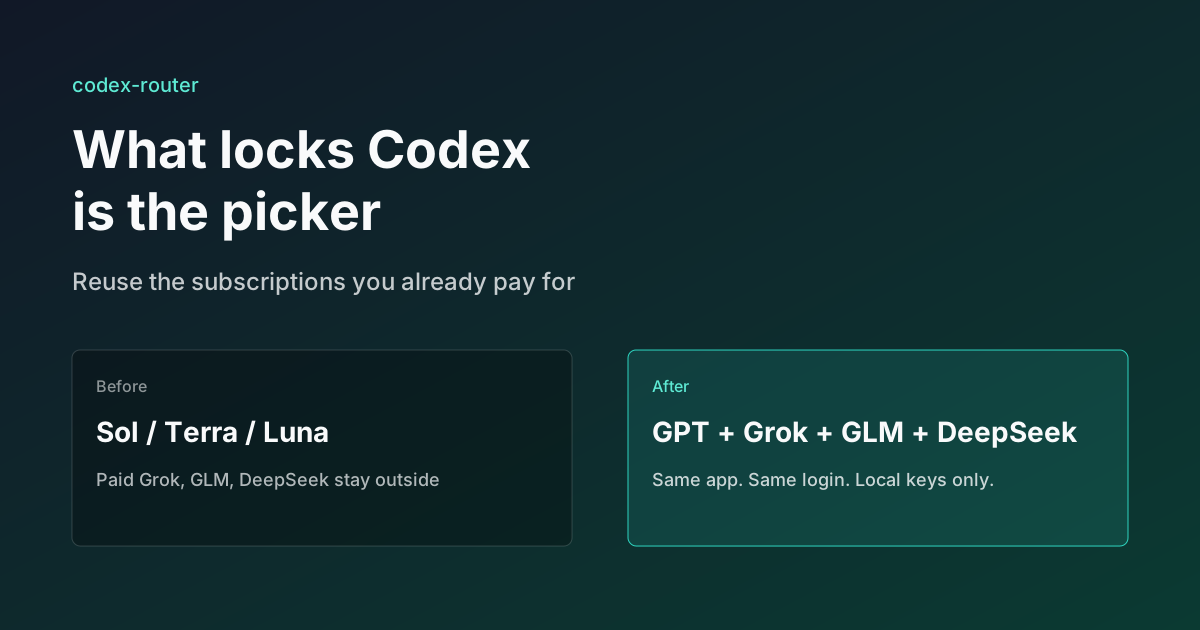
What Locks Codex Is the Picker, Not the Models
You already pay for OpenCode Go, Grok, and Z.ai, but the Codex picker still shows mostly GPT. The community project codex-router does not teach another install ritual. It puts subscriptions you already bought back into the selector, keeps keys on the machine, and leaves native GPT alone.
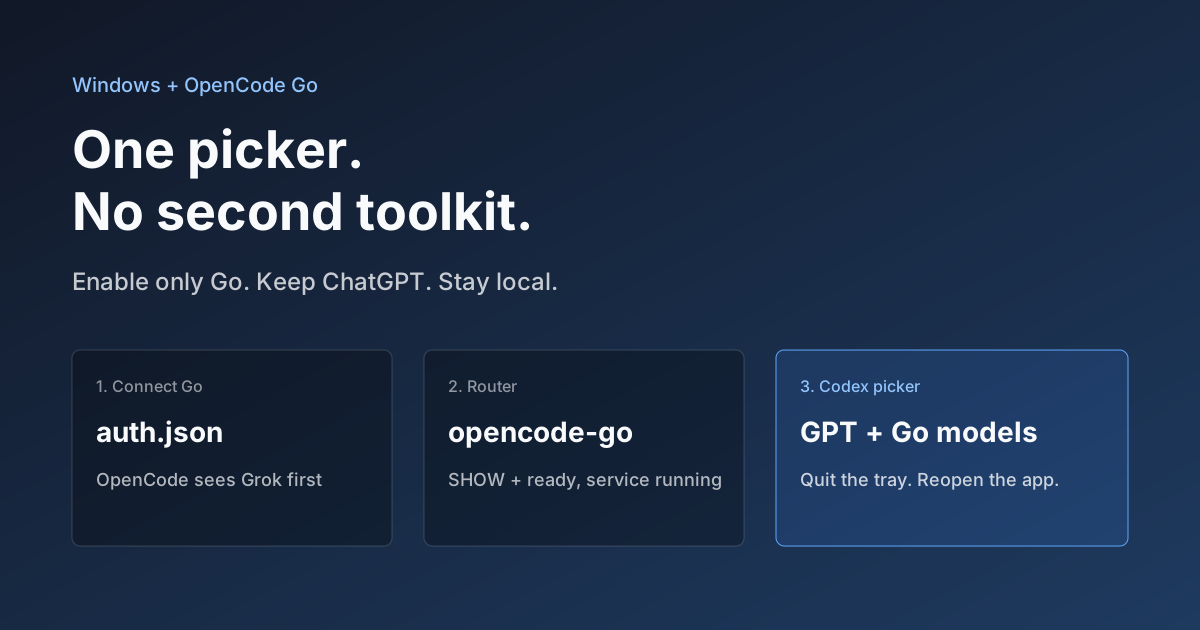
Hook OpenCode Go into Codex on Windows. Do Not Open a Second Toolkit.
A ChatGPT-signed Codex desktop app still shows mostly GPT in the picker. On Windows, enable only OpenCode Go and the Grok, GLM, Kimi, DeepSeek, and MiniMax models you already pay for appear in the same selector. Keys stay local. Native GPT stays put.
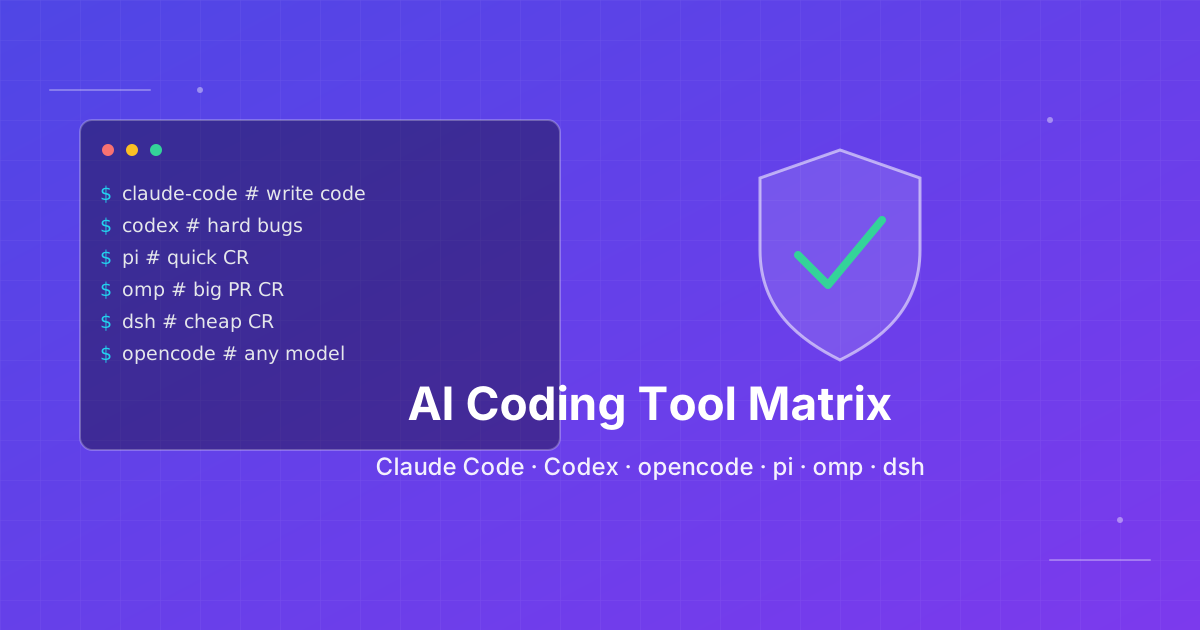
Seven AI Coding CLIs, Six Months: No Matter How Strong the Model, Work Needs Supervision
Claude Code, Codex, opencode, pi, omp and DeepSeek Harness all have personalities. After six months of deep use I run a division of labor: pi for the fastest cheapest reviews, omp for complex PRs, DeepSeek Harness on V4 Flash for high-frequency low-cost review, and Claude Code, Qoder and Cursor for writing. No matter how strong the model, work needs supervision — ideally from an independent third party.