
Termany is an agent-native terminal from ThinkAny. The repo thinkany-ai/termany is AGPL-3.0, TypeScript, created 2026-06-29. On 2026-09-14 GitHub listed 366 stars and 31 forks. The product site is termany.sh. Latest GitHub release is v0.2.3 (2026-09-14); that notes says macOS is on 0.2.3 while Windows and Linux remain on v0.2.0. 366 stars is a heat signal, not traffic.
Compare Warp if you wanted a paid AI terminal, VelaTerm if you wanted another open agent session tree, or cmux if you wanted a Ghostty-based macOS terminal with agent rings.
Key Features
- Many sessions in one window: workspace (far-left rail) to page to tab to pane. Splits with ⌘D / ⇧⌘D. Background tabs keep running and keep scrollback.
- Needs-attention tags: each pane is tagged working, done, or needs attention from the foreground job and on-screen changes, not the shell prompt. Tagged panes sit in an ACTIVE section above the page tree.
- Eleven built-in agents: Claude, Codex, Gemini, Grok Build, OpenClaw, FastClaw, Hermes, OpenCode, Cursor, Kimi, and OMP. Claude, Codex, and OpenClaw are on by default; enable the rest in Settings → Agents. Detect probes local binaries.
- Bots and group chat: name, avatar, role, model, and working folder per Bot. A lead member delegates;
@mentions route work; topics keep tasks apart. Idle ACP Bot processes that support session restore are released after about five minutes (v0.2.3). - Review in the same window: ⌘E cycles Files (CodeMirror editor plus Markdown, HTML, image, video, audio, PDF, DOCX, XLSX, PPTX preview), Git diff (including worktree switch), Conversation (ACP chat), and Browser (opens a served port).
- Worktrees, SSH, ports: per-pane SSH with reconnect; session history across worktrees (⇧⌘H); activity monitor for CPU, memory, and which process holds a port (⇧⌘M).
- Agent cost: ⇧⌘U reads Claude and Codex transcripts into estimated cost, tokens, cache, daily chart, and per-model / per-project breakdowns. Other agents show as unsupported.
- Chrome, not just palette: 14 built-in themes restyle sidebar, pane gaps, corners, and shadows. About 60 rebindable actions. Interface in 21 languages. Installed CodexThemes packs appear in Appearance.
Limitation: usage and session history only cover Claude and Codex today. AGPL-3.0 treats network use as distribution; a modified hosted copy must offer corresponding source. Commercial licensing outside AGPL is via support@thinkany.ai. Keys are BYOK, stored locally in ~/.termany/termany.db. If you do not run several agent sessions at once, Termany is just a split terminal with themes.
Use Cases
- People running five or more agent sessions on one repo, mixing Claude Code, Codex, and OpenCode.
- Worktree users who hit port conflicts and want the diff next to the agent that wrote it.
- Remote-box workflows that keep long tasks on a dev host so a sleeping laptop does not kill them.
Pricing
| Piece | Price | Notes from first-party pages 2026-09-14 |
|---|---|---|
| Desktop / web app | $0 | AGPL-3.0. Downloads at termany.sh. About 366 stars. |
| Commercial license | Contact ThinkAny | Outside AGPL, email support@thinkany.ai. |
| Model usage | Your provider bill | BYOK. No keys in the repo. Claude and Codex Bots use the official local CLIs. |
Getting Started
- Download a signed build from termany.sh, or
npm installthenpnpm dev:desktopfrom the repo (needs Xcode CLT on macOS). - Open Settings → Agents. Leave Claude / Codex / OpenClaw on, or Detect what is already installed.
- Split a pane (⌘D). Run an agent on the left and cycle the right pane to Git diff (⌥⌘G) while it works.
- Press ⇧⌘U after a Claude or Codex day if you need a cost check.
First-party start: the README and termany.sh.
Frequently Asked Questions
Is it a Claude Code replacement?
No. Termany hosts the CLIs you already authenticated. Claude Code is still Anthropic's agent.
Does token usage work for Gemini or OpenCode?
Not on 2026-09-14. The README says usage and session history read Claude and Codex transcripts today.
macOS only?
No. The site lists macOS, Windows, and Linux. GitHub v0.2.3 ships signed macOS dmgs; that release says Windows and Linux remain on v0.2.0.
Can I run a modified copy as a hosted service?
AGPL-3.0 says network use is distribution. Offer corresponding source, or ask ThinkAny for a commercial license.
Alternatives
- Warp: paid AI terminal with Build / Light seats.
- VelaTerm: MIT agent session tree on Tauri.
- cmux: Ghostty-based macOS terminal with agent notification rings.
- Crush: Charm TUI agent, not a multi-session terminal.
Tips
- Quote 366 stars and AGPL-3.0 from the 2026-09-14 GitHub check, not an invented visit count.
- Confirm the OS build: macOS 0.2.3 vs Windows/Linux 0.2.0 on that date.
- Do not promise usage dashboards for agents other than Claude and Codex.
Conclusion
Termany is a local-first AGPL terminal for people who already run many coding agents, not a new model vendor. Start at termany.sh, then decide whether Warp or staying inside Claude Code already covers the workflow.
Comments
No comments yet. Be the first to comment!
Related Tools


Related Insights

Skills + Hooks + Plugins: How Anthropic Redefined AI Coding Tool Extensibility
An in-depth analysis of Claude Code's trinity architecture of Skills, Hooks, and Plugins. Explore why this design is more advanced than GitHub Copilot and Cursor, and how it redefines AI coding tool extensibility through open standards.
Seven AI Coding CLIs, Six Months: No Matter How Strong the Model, Work Needs Supervision
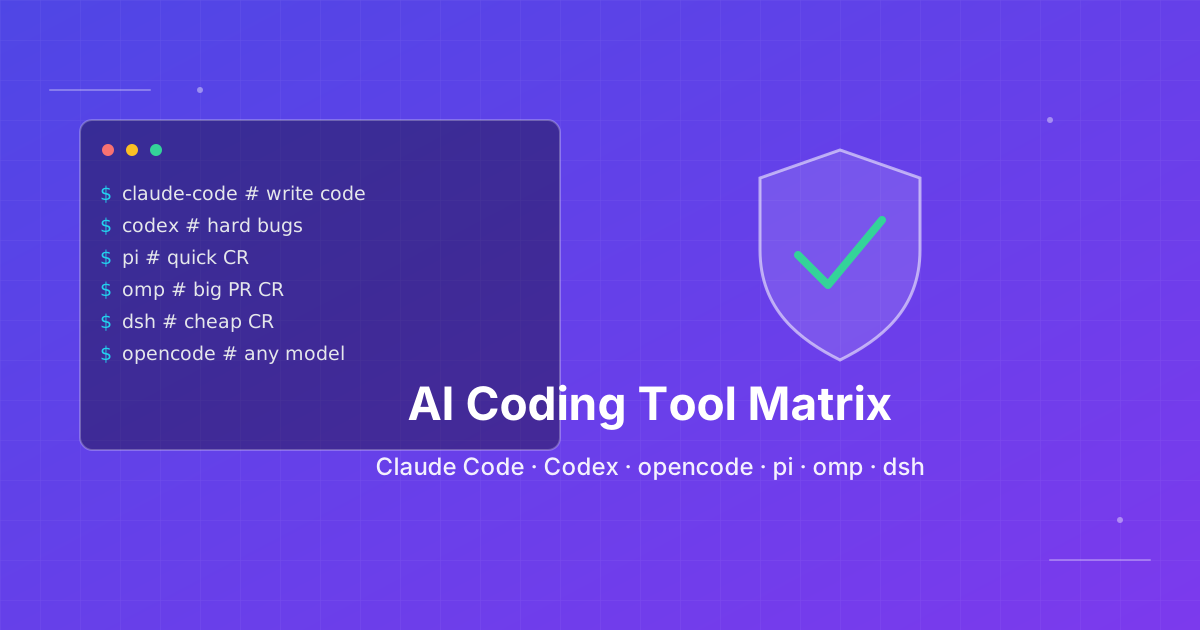
Claude Code, Codex, opencode, pi, omp and DeepSeek Harness all have personalities. After six months of deep use I run a division of labor: pi for the fastest cheapest reviews, omp for complex PRs, DeepSeek Harness on V4 Flash for high-frequency low-cost review, and Claude Code, Qoder and Cursor for writing. No matter how strong the model, work needs supervision — ideally from an independent third party.
Claudesidian: Transform Obsidian into an AI-Powered Second Brain
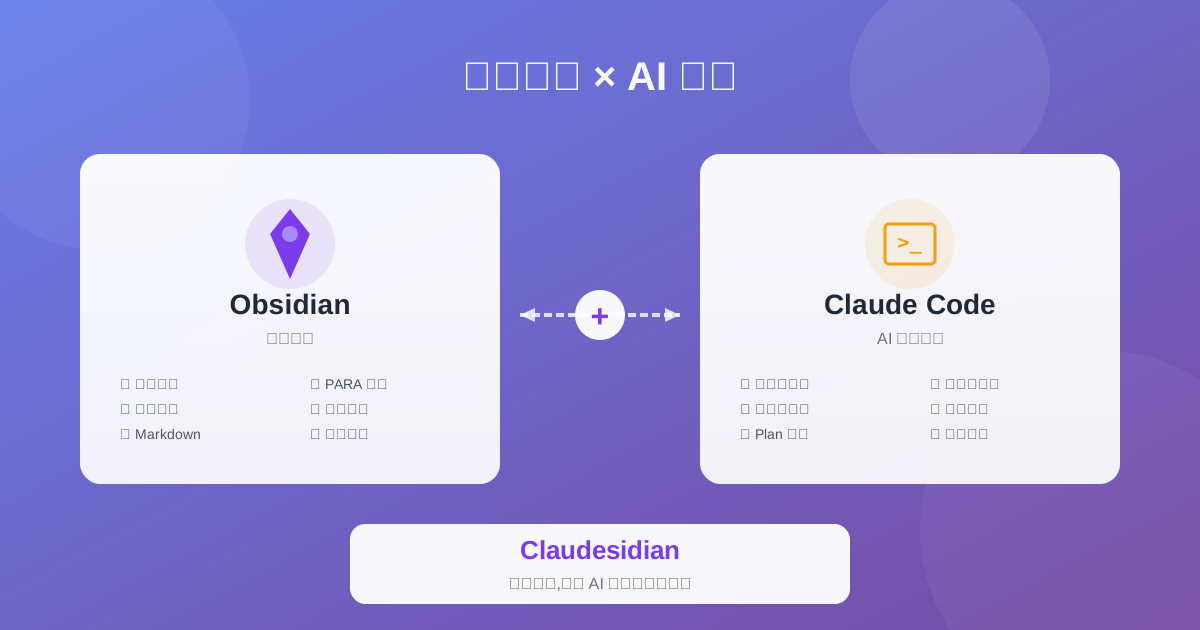
Discover Claudesidian, an open-source project that perfectly integrates Obsidian with Claude Code. Built-in PARA method, custom commands, and automated workflows for a complete idea-to-implementation solution.