
Specboard
Specboard is a spec management tool built for developers who work with AI coding agents. It moves an idea through a four-stage pipeline, Backlog to Specs to Plan to Tasks, so the agent always has structured, versioned context instead of a copy-pasted prompt. Where a plain Markdown repo goes stale, Specboard keeps specs, priorities, and progress linked and queryable by the agent through a native MCP server.
Compare Spec Kit if you prefer a CLI and in-repo process, or Plandex for a terminal plan-and-execute agent.
Key Features
- 4-stage AI pipeline: Backlog, Specs, Plan, and Tasks, with automatic generation as a feature advances.
- Mind map canvas: brainstorm on a freeform React Flow board, connect nodes, and convert ideas into features.
- Markdown editor: inline editing with syntax highlighting, auto-save, and a preview toggle; your docs stay plain
.md. - Native MCP server: four tool areas (list, get, create, and update) so Claude Code, Cursor, and Copilot can query requirements and mark progress without copy-paste.
- Constitution system: project-level principles with version history, plus impact analysis that shows pipeline completeness and drift.
- Database-first: content lives in PostgreSQL rather than scattered Markdown, so relationships stay clean.
Use Cases
Who Should Use This Tool?
- Solo developers wearing both hats: keep product requirements and agent tasks in one system instead of two.
- Product people handing off to AI-assisted engineers: agents pick up a task and get the right requirement doc, not the whole repo.
- Teams using Claude Code, Cursor, Copilot, or Windsurf: MCP-compatible agents query specs directly.
Problems It Solves
- Context scattered everywhere: one integrated system replaces Notion plus Jira plus stale repo docs.
- Agents cannot read your docs: requirements become queryable instead of human-only prose.
- No unified progress: tasks, priorities, and status live in the same board the agent works from.
Pricing
Specboard is MIT licensed and self-hostable; you deploy it with PostgreSQL and point your AI providers (OpenAI, Anthropic, Gemini, Mistral) at it.
Advantages & Unique Selling Points
- MCP-first design: it was built around MCP rather than retrofitted, so agents get first-class
get_epic,get_ready_epics, andcomplete_tasktools. - Plain Markdown, Git-backed: docs are readable anywhere and editable with any tool, so there is no data-hosting situation.
- Multiple providers with load balancing: pick and prioritize models without editing configs.
Getting Started
- Clone the repo and run
pnpm install, then configure.envwith your database URL. - Push the schema with
pnpm db:push. - Create a feature, brainstorm in the mind map, and advance it through the pipeline.
- Point your agent at the MCP server (or use the CLI:
specboard context) and let it query requirements.
Frequently Asked Questions
Which agents work with Specboard?
Any MCP-compatible agent: Claude Code, Cursor, Copilot, Windsurf, and any tool that speaks the protocol.
Is it a managed service?
No. The repo is MIT open source and database-first; you self-host and plug in the model providers you already use.
What does the MCP server do?
It exposes specification and task tools so agents can read what to build and record what is done, keeping everyone aligned.
Alternatives
- Spec Kit: CLI and in-repo Spec-Driven Development process from GitHub.
- Plandex: terminal plan-and-execute agent with a diff sandbox.
- Cline: IDE, CLI, and SDK agent with BYOK inference.
Tips
- Use the constitution to record project rules once so every agent session inherits them.
- Convert mind map branches into features early so nothing stays stuck in a brainstorm.
- Let the agent update task status through MCP so the board reflects real progress.
Conclusion
Specboard is the coordination layer between you, your docs, and your coding agents. If you keep re-explaining context to an agent, start at specboard.io and give it requirements it can actually query.
Comments
No comments yet. Be the first to comment!
Related Tools


Related Insights

Skills + Hooks + Plugins: How Anthropic Redefined AI Coding Tool Extensibility
An in-depth analysis of Claude Code's trinity architecture of Skills, Hooks, and Plugins. Explore why this design is more advanced than GitHub Copilot and Cursor, and how it redefines AI coding tool extensibility through open standards.
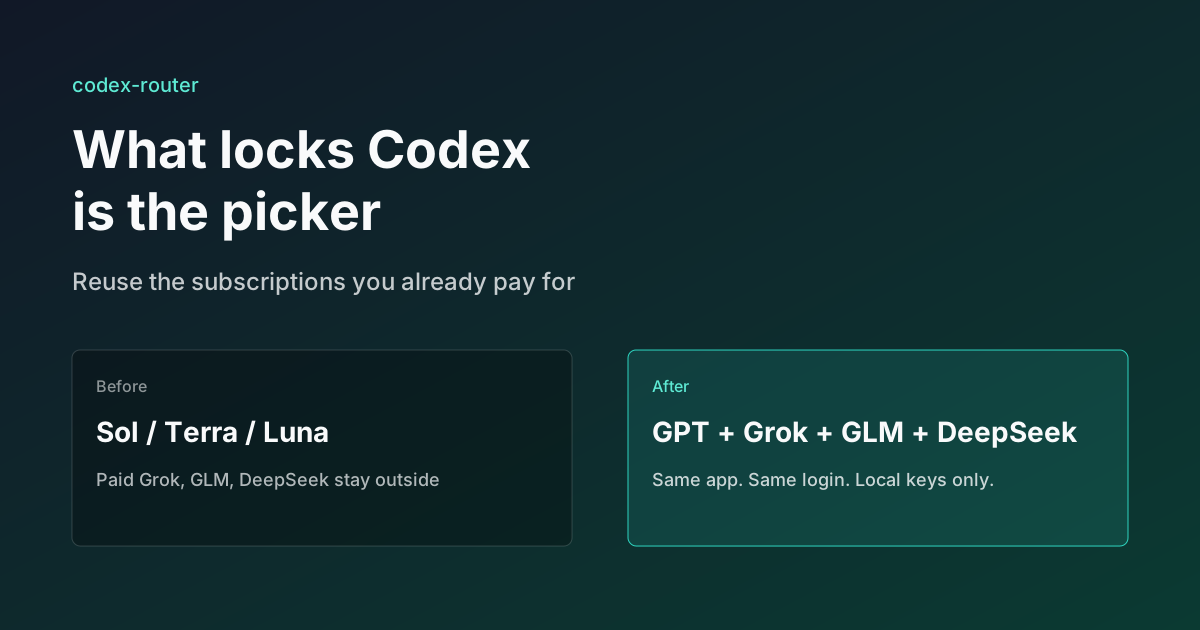
What Locks Codex Is the Picker, Not the Models
You already pay for OpenCode Go, Grok, and Z.ai, but the Codex picker still shows mostly GPT. The community project codex-router does not teach another install ritual. It puts subscriptions you already bought back into the selector, keeps keys on the machine, and leaves native GPT alone.
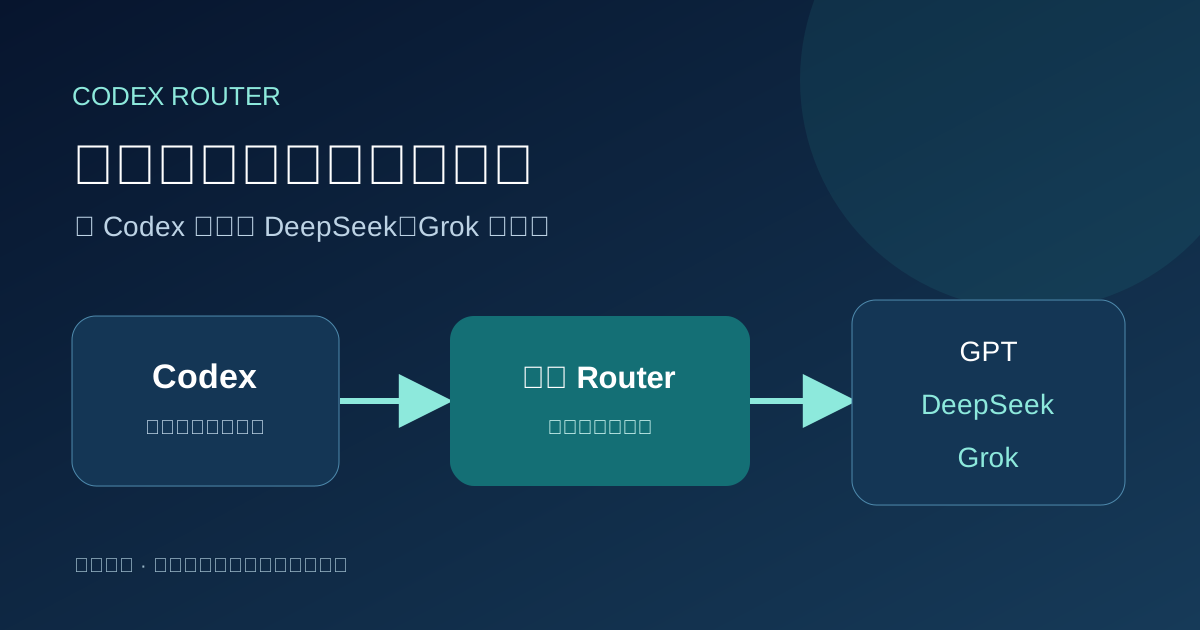
Running low on ChatGPT Codex quota? Switch to DeepSeek or Grok inside Codex
Codex Router lets you keep your Codex workspace while using DeepSeek, Grok, and other external models. A plain-English guide to routing, quotas, and network access.