
Oral Health Analyzer
Oral Health Analyzer is a Claude Code skill from WellAlly Health (formerly Claude-Ally-Health), an MIT-licensed, local-first personal health record project maintained by WellAlly Tech. It turns the dental records you log with the /oral command (check-ups, fillings, root canals, extractions, brushing and flossing habits, and problems such as bleeding gums or ulcers) into a running dental history with risk estimates and reminders.
Not a diagnosis. All oral problems should be diagnosed and treated by a dentist. The analysis does not replace a dental exam. For severe pain, swelling, or injury, get care right away.
What it analyzes
- Trends in cavities, gum health, and hygiene habits over time.
- Caries risk from sugar intake, hygiene routine, fluoride use, saliva, past cavities, and family history, reported as low, medium, or high with the main factors.
- Gum disease staging that follows familiar clinical thresholds, from healthy (no bleeding, 1-3 mm probing depth) through gingivitis to mild, moderate, and severe periodontitis (over 6 mm). Probing depths come from your dentist's records, not from the skill.
- Oral cancer risk factors such as smoking, alcohol, betel nut chewing, HPV, and sun exposure for the lips. One or two factors count as medium risk, three or more or a previous lesion as high.
- Correlations with the nutrition, chronic disease, and medication modules, for example diabetes and gum health.
- Reminders for the next check-up and overdue visits.
How to use it
WellAlly Health is a Claude Code project, not a standalone package. Clone it and start Claude Code in the folder:
git clone https://github.com/huifer/WellAlly-health.git
cd WellAlly-health
claude
The /oral command supports checkup, treatment, hygiene, issue, status, trend, reminder, and screening. Teeth are identified by FDI numbers (for example 16 or 46). Examples adapted from the upstream docs (which are in Chinese):
/oral checkup 2025-06-10 cavity on tooth 16, gums healthy
/oral treatment root_canal tooth 46, 2 visits
/oral hygiene flossing daily
/oral screening periodontal
/oral trend 6months
Output
Status and trend reports, risk levels with contributing factors, prevention and lifestyle suggestions, a treatment history per tooth, and warnings when a problem is recorded repeatedly or a check-up is overdue.
Limitations
- It cannot take X-rays, run lab tests, or examine your mouth. Results depend on accurate records.
- AI analysis of dental X-rays is listed upstream as a planned feature, not a current one.
- Advice is general and needs your dentist's judgment for your case.
FAQ
Do I need my dentist's chart to use it? No, but gum disease staging relies on probing depths that only a dental exam provides. Without them, the skill can still track habits, symptoms, and treatments.
Does my data leave my machine? Records are stored as local files. The analysis runs through Claude Code, so the content you ask about is sent to the model Claude Code uses.
Alternatives
- Nutrition Analyzer: sugar intake is one of the caries risk inputs.
- Health Trend Analyzer: links conditions and medication with symptoms over time.
- AI Health Analyzer: cross-module overview of your health records.
Browse more in the skills category or the health tag.
Comments
No comments yet. Be the first to comment!
Related Tools


Related Insights

Anthropic Subagent: The Multi-Agent Architecture Revolution
Deep dive into Anthropic multi-agent architecture design. Learn how Subagents break through context window limitations, achieve 90% performance improvements, and real-world applications in Claude Code.
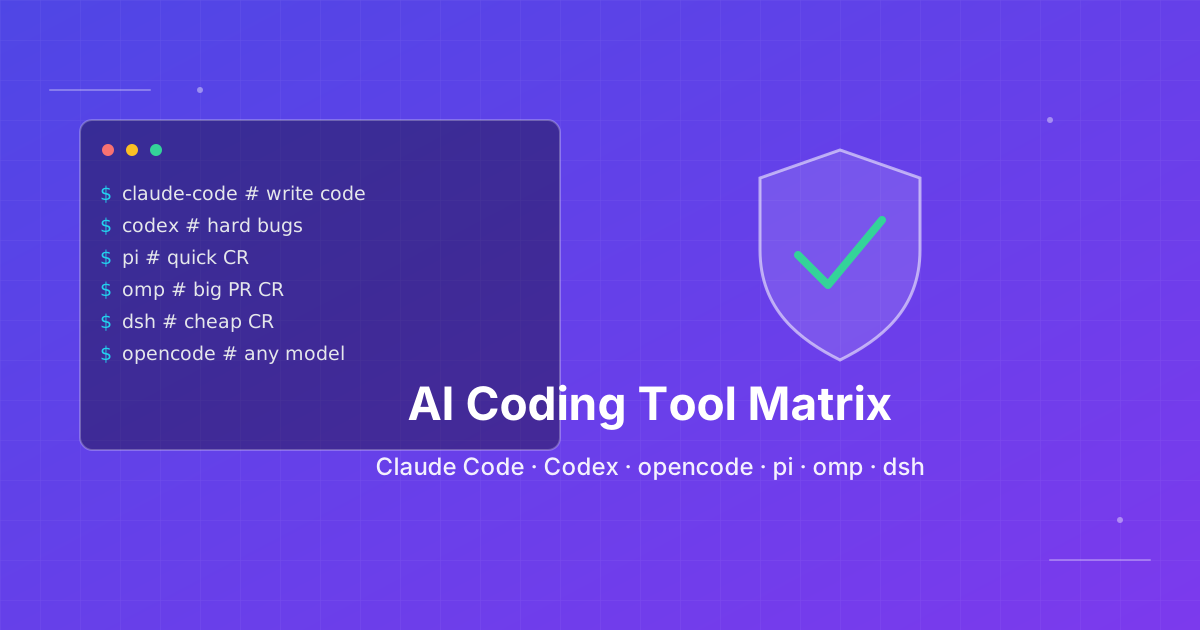
How to pick an AI coding CLI for your repo
Match Claude Code, Codex CLI, OpenCode, Pi, omp, DeepSeek Harness, and Grok Build to the work you actually run. Docs rechecked 2026-10-06.

Skills + Hooks + Plugins: How Anthropic Redefined AI Coding Tool Extensibility
An in-depth analysis of Claude Code's trinity architecture of Skills, Hooks, and Plugins. Explore why this design is more advanced than GitHub Copilot and Cursor, and how it redefines AI coding tool extensibility through open standards.