

VelaTerm is an open-source terminal and agent manager built for the AI-agent era. It organizes scattered terminal sessions and coding agents into a project-group-session tree, treats agents such as Claude Code and Codex as first-class citizens with live status, and lets you take over any session from a browser or another machine. Built on Tauri 2 with a tiny native core, it is a lightweight alternative to managing dozens of agent tabs by hand.
Key Features
- Session tree: Projects, arbitrarily nested groups, and sessions with drag-and-drop reordering, search, and persisted collapse state.
- Agent awareness: Per-session status for supported agents (working, waiting for input, done) driven by the agents' own hook mechanisms, with desktop notifications and session resumption.
- Real PTYs: Every session is a full pseudo-terminal kept alive in the background, with complete input, output, and resize handling.
- Nine agents as first-class sessions: Claude Code, Codex, Copilot, and more run per session; mix them in one window and manage from the same tree.
- Remote access: Take over any session over SSH or from a browser; agents keep running on the host, reconnect and continue.
- Split panes: Horizontal and vertical splits with keyboard shortcuts, plus document, image, and browser tabs.
Use Cases
Who Should Use This Tool?
- Multi-agent developers: Anyone running several coding agents at once who needs to track which one is blocked or waiting.
- Remote/SSH workflows: Developers who want agents to keep running on a server and check in from anywhere.
- Terminal power users: People who want tmux-style organization without leaving a modern GUI.
Problems It Solves
- Session sprawl: Several agents running at once break a flat row of tabs; the tree keeps them navigable.
- No agent-state visibility: A plain terminal cannot tell whether an agent is working, blocked, or finished.
- Lost context: Closing a terminal normally throws away the agent conversation; transcripts survive restarts here.
Pricing
| Plan | Price | Features |
|---|---|---|
| Open Source | $0 | Full app under MIT license; self-hosted remote access. |
Advantages & Unique Selling Points
Compared to Competitors:
- Agent-first design: Unlike tmux or Warp, VelaTerm knows which session is an agent and its state, and can resume it.
- Tiny native core: Tauri 2 with no Electron or bundled Chromium; installs in megabytes and stays out of RAM.
- Remote takeover: Browser or SSH access lets long-running agents keep working while you check in from anywhere.
What Makes It Stand Out:
- Nine agents run as first-class sessions in one window.
- Real PTYs with background persistence.
- Cross-platform with full parity on macOS, Linux, and Windows.
Getting Started
- Download from velaterm.com for macOS, Linux, or Windows.
- Create a project and start a terminal or agent session.
- Organize: Drag sessions into groups; name, archive, and search them.
- Take over remotely: Enable remote access and reconnect from a browser or over SSH.
Frequently Asked Questions
Is VelaTerm open source?
Yes, MIT licensed with source on GitHub (vlinx-io/VelaTerm).
Which agents does it support?
Nine agents run as first-class sessions, including Claude Code, Codex, and Copilot.
Can I access sessions remotely?
Yes. Sessions can be taken over over SSH or from a browser, and agents keep running on the host.
Alternatives
If VelaTerm isn't the right fit, consider these alternatives:
- Herdr: Runtime that keeps coding agents alive in background terminal sessions.
- Superset: Run an army of CLI agents in isolated worktrees.
- Emdash: Desktop agentic dev environment isolating parallel agents in Git worktrees.
- cmux: Ghostty-based macOS terminal with vertical tabs and agent notifications.
Tips & Best Practices
- Use nested groups per project: Keep agents grouped by domain so the tree stays navigable at scale.
- Watch agent status badges: The working/blocked/done states tell you who needs input without opening every session.
- Leverage remote takeover: Start long tasks on a server, then check in from a browser anywhere.
Comments
No comments yet. Be the first to comment!
Related Tools


Related Insights
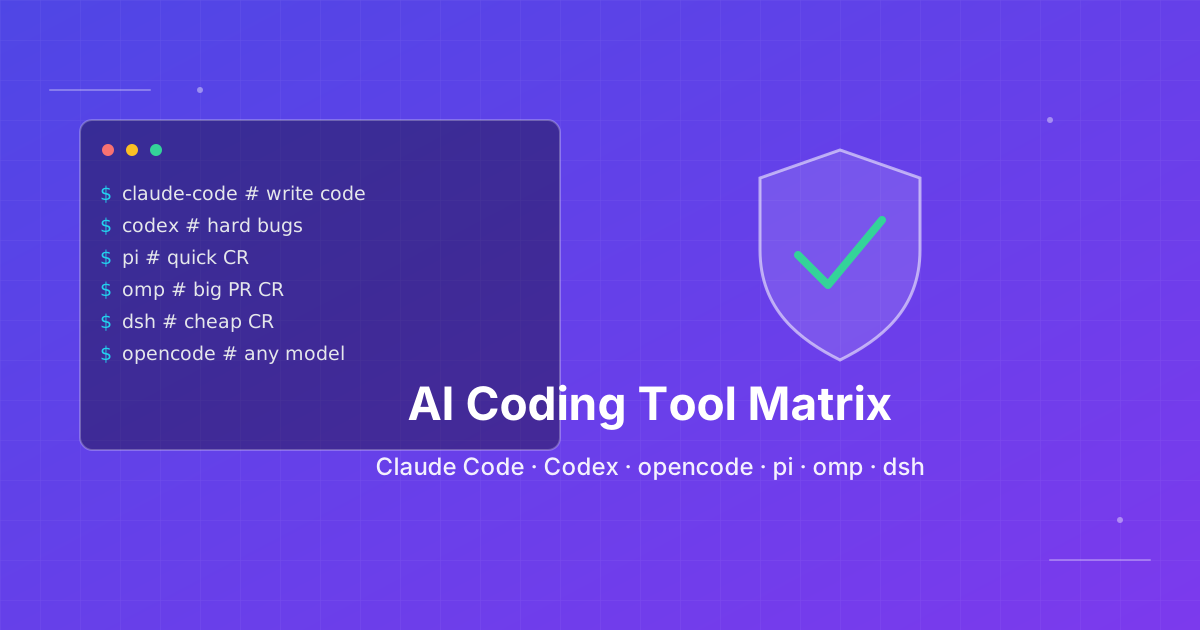
Seven AI Coding CLIs, Six Months: No Matter How Strong the Model, Work Needs Supervision
Claude Code, Codex, opencode, pi, omp and DeepSeek Harness all have personalities. After six months of deep use I run a division of labor: pi for the fastest cheapest reviews, omp for complex PRs, DeepSeek Harness on V4 Flash for high-frequency low-cost review, and Claude Code, Qoder and Cursor for writing. No matter how strong the model, work needs supervision — ideally from an independent third party.
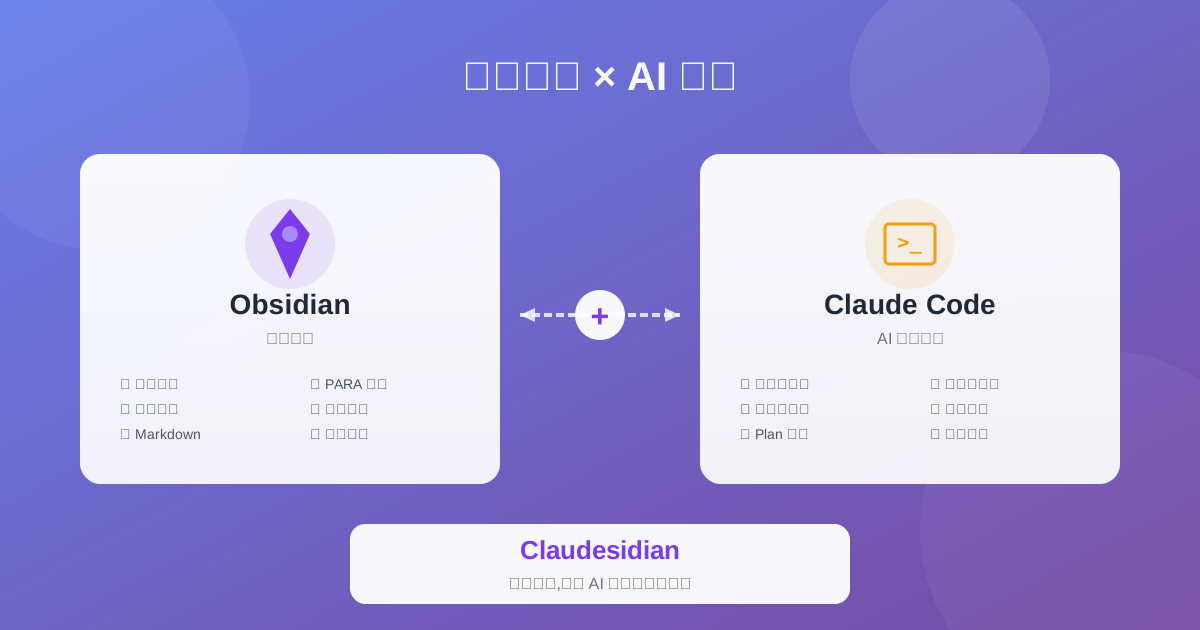
Claudesidian: Transform Obsidian into an AI-Powered Second Brain
Discover Claudesidian, an open-source project that perfectly integrates Obsidian with Claude Code. Built-in PARA method, custom commands, and automated workflows for a complete idea-to-implementation solution.
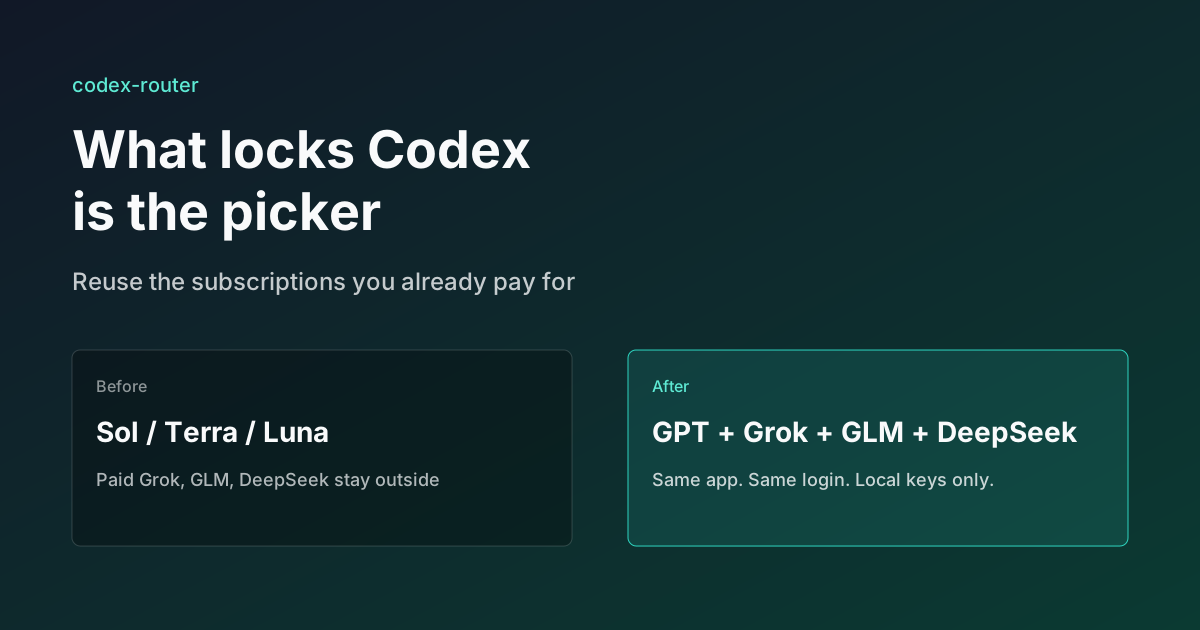
What Locks Codex Is the Picker, Not the Models
You already pay for OpenCode Go, Grok, and Z.ai, but the Codex picker still shows mostly GPT. The community project codex-router does not teach another install ritual. It puts subscriptions you already bought back into the selector, keeps keys on the machine, and leaves native GPT alone.